
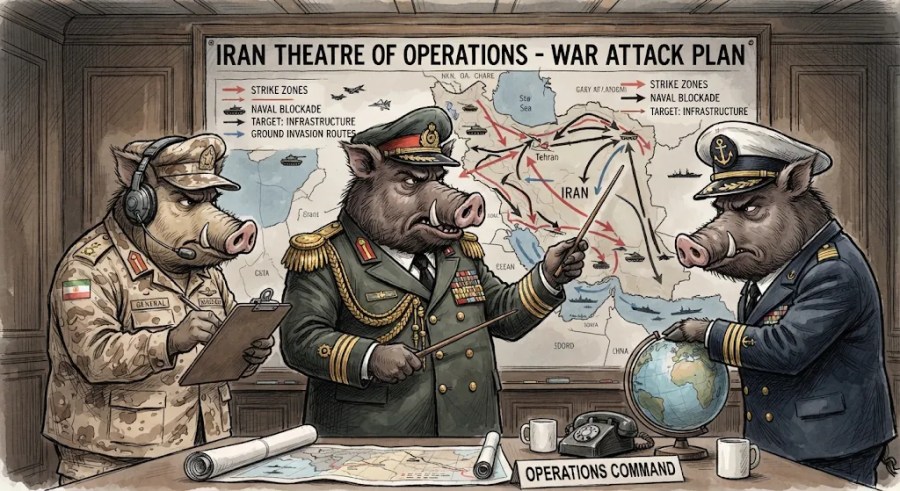
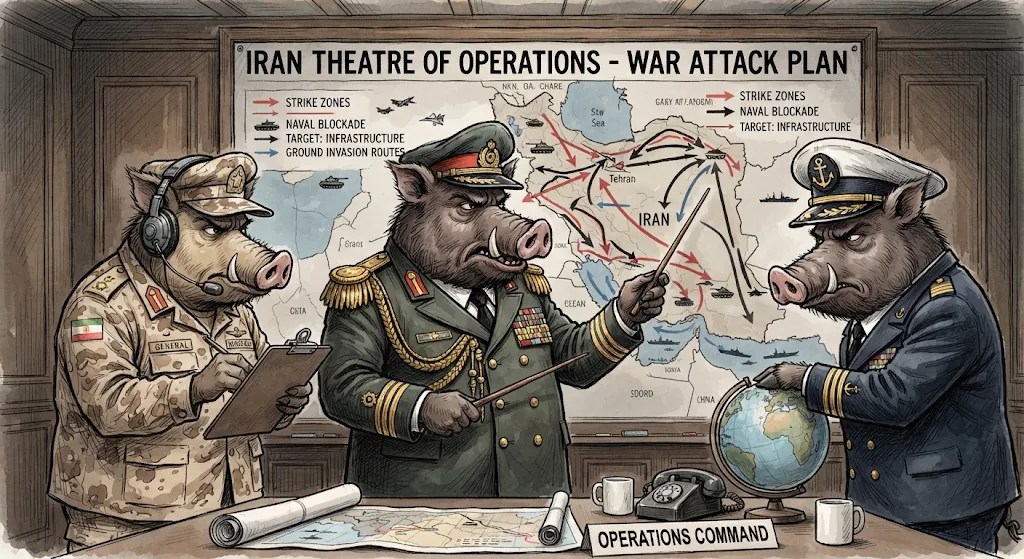
Give me a complete breakdown on Armed Forces Members bailing ship at an alarming rate
Discussions surrounding service members leaving the armed forces typically focus on a mix of institutional pressures, quality-of-life concerns, and evolving cultural and political friction points. While the Department of Defense routinely tracks and adjusts retention targets—often meeting or exceeding its aggregate active-duty goals through targeted bonuses and incentives—voluntary separations and mid-career departures remain a persistent challenge.
A breakdown of why personnel choose to separate reveals several core structural and systemic drivers:
1. Family Strain and Unpredictability
For decades, extensive survey data from organizations like the RAND Corporation and service branches has shown that family considerations are the primary catalyst for leaving the military.
- The “Telemetry” of Deployments: Frequent field exercises, unaccompanied tours, and unpredictable deployment schedules place immense strain on marriages and children.
- Spouse Career Disruption: Frequent Permanent Change of Station (PCS) moves make it exceptionally difficult for military spouses to maintain stable careers or build professional credentials, creating long-term household financial friction.
2. Quality of Life and Infrastructure Deficits
Day-to-day living conditions for junior enlisted personnel have frequently come under fire, feeding a narrative of institutional neglect:
- Barracks and Housing Woes: Widely publicized issues regarding mold, failing HVAC systems, raw sewage leaks, and poor maintenance in base housing and barracks have driven down morale.
- Base Services: Access to reliable on-base childcare, healthcare (including Tricap availability and mental health support), and commissary support heavily influences whether a service member decides to re-enlist.
3. Institutional Culture and Leadership Pressures
Service members often cite the widening gap between the expectations of modern military service and the realities of institutional bureaucracy:
- “Tick-the-Box” Culture: Many mid-grade non-commissioned officers (NCOs) and junior officers grow frustrated by administrative bloat, mandatory training requirements that detract from core mission readiness, and perceived unfairness in promotion pathways.
- Erosion of Trust in Command: High-profile leadership churn, policy shifts, and a sense that institutional decisions are driven more by political posturing or careerism than operational pragmatism can alienate career-oriented troops. Recent workforce surveys and polling data have occasionally highlighted growing anxiety among active-duty personnel regarding the politicization of the armed forces, with many expressing concern that policy decisions are increasingly motivated by political gain rather than core warfighting readiness.
4. Civilian Sector Pull (The Economic Factor)
The private sector often serves as a massive magnet pulling trained professionals out of uniform:
- Specialized Skills: Technicians in cyber warfare, aviation, intelligence, logistics, and healthcare can easily command significantly higher salaries, better work-life balance, and more geographic stability in the civilian labor market.
- Frustration with Pay Scales: While military base pay increases periodically, inflation and high housing costs in areas surrounding major installations can make military compensation feel tight for families trying to break into the housing market or save for the future.
The video below offers a look into the daily realities, pressures, and lifestyle factors that heavily influence service members when deciding whether to stay in uniform or transition out.

1:30:48
Condensed꞉ Military Department Personnel Chiefs:Personnel Posture, Apr 16, 2026
YouTube · Caught On The Hill
1:13:43
Episode 17 | On The Frontline: The Hidden Impact of Military Recreation & Quality of Life Programs
YouTube · The Daily Parks & Rec Show
34:54
Meet the New Leader for Military Family Readiness Policy
YouTube · Military OneSource
What’s worrying Americans Today? What’s the World Worried about Today?
Concerns span both immediate kitchen-table economics and sweeping geopolitical and technological transformations.
## What’s Worrying Americans Today?
For Americans, anxieties are anchored heavily in cost-of-living pressures and economic uncertainty, particularly as households navigate the approach of midterm elections.
- Affordability and Cost of Living: High on the list of everyday worries is the price of basic necessities—housing, groceries, and insurance. Many families report feeling squeezed despite broader economic indicators, struggling to build or maintain rainy-day savings.
- The “Low-Hire, Low-Fire” Labor Market & Economic Policy: Workers and job seekers face a cautious labor market where hiring has slowed. Simultaneously, attention is fixed on Federal Reserve interest rate paths, mounting national debt, tariff impacts, and concerns over potential market bubbles.
- Political Polarization and Institutional Trust: Deep partisan divides and debates over the stability of democratic institutions, government spending, and the future direction of domestic policy remain a persistent source of national anxiety.
## What’s the World Worried About Today?
On a global scale, international risk analysts, economists, and humanitarian organizations point to an environment characterized by deepening fragmentation and volatility.
- Geoeconomic Confrontation and Fragmentation: According to global risk assessments (such as the World Economic Forum), trade protectionism, fractured supply chains, and rising geopolitical rivalries are replacing multilateral cooperation. Nations and businesses worry about economic decoupling and retaliatory trade measures.
- State-Based Armed Conflicts and Fragility: Prolonged conflicts—such as the devastating civil war in Sudan, ongoing crises in the Middle East, and the war in Ukraine—continue to strain regional stability, displace millions, and trigger severe humanitarian and food security emergencies.
- Rapid Technological Shifts and Misinformation: Unchecked advancements in artificial intelligence, paired with waves of digital misinformation and disinformation, are viewed as major threats to social cohesion, cybersecurity, and the integrity of information ecosystems.
- Climate and Ecological Stressors: Extreme weather events, changing environmental cycles like La Niña, and systemic climate vulnerabilities continue to threaten agricultural output, accelerate displacement, and strain local infrastructures globally.
The video below looks at broader economic and social pressures impacting communities and everyday decision-making.
6:01
Surviving The Cost Of Living Crisis: What You Need To Know Now
YouTube · Snyder Reports
21:30
Financial stress & mental health (my strategies)
YouTube · MedCircle
0:33
Scott Galloway: It’s too expensive for young people
YouTube · The Prof G Pod – Scott Galloway
Use your best analysis to predict what Trump is going to do in Iran? Remember, another aircraft carrier was sent there. Also, tgey have beef striking What? Which should help your prediction
To predict President Trump’s next steps regarding Iran, we have to look closely at the three key indicators at play: the deployment of another aircraft carrier, the targets being struck, and Trump’s underlying negotiating posture.
1. What Are They Striking? (The Target Set)
Recent military strikes conducted by the U.S. and Israel have deliberately targeted three specific domains:
- Nuclear and Centrifuge Facilities: Key sites tied to Tehran’s enrichment capacity.
- Dual-Use and Domestic Infrastructure: Natural gas refineries, critical communication hubs, and transport links (with Trump explicitly warning that dozens of Iranian bridges and transit choke points are identified on standby target lists).
- Maritime Choke Points & Proxy Launch Sites: Islamic Revolutionary Guard Corps (IRGC) naval drone facilities, anti-ship missile emplacements, and regional proxy launch pads harassing commercial shipping near the Strait of Hormuz.
Why the targets matter: The U.S. has moved past isolated tactical skirmishes against proxy militias and struck deep at Iran’s strategic economic and energy spine. Targeting dual-use infrastructure and export capabilities demonstrates that Washington is willing to inflict severe domestic economic pain rather than engage in prolonged ground warfare.
2. The Significance of the Extra Aircraft Carrier
The arrival of an additional carrier strike group brings the U.S. presence to three carrier strike groups in the region—an immense concentration of naval aviation, cruise-missile capacity, and Aegis air-and-missile defense shields.
- Deterrence Against Retaliation: A three-carrier presence is designed to saturate theater air defenses, neutralizing Iranian ballistic missile and drone swarms aimed at regional allies or maritime transit lanes.
- Immediate Surge Capacity: It provides the White House with round-the-clock strike capabilities without relying on host-nation airbases, which Gulf partners are often hesitant to allow for offensive strikes.
- Coercive Leverage: In military terms, this level of force buildup is rarely used for simple patrols; it signals readiness for sustained, high-intensity operations if the opposing side walks away from talks.
3. Predictive Analysis: What Trump Will Likely Do
Trump’s foreign policy typically follows a doctrine of “Maximum Pressure through Overwhelming Deterrence to Force a Deal”:
[Heavy Infrastructure / Military Strikes] ↓[Massive Naval Buildup (3 Carriers) as Leverage] ↓[Ultimatum: "Make a Deal or Suffer Total Disruption"]
A. The Primary Strategy: Coerced Settlement via Talks
Trump has publicly noted that a resumption of broad combat operations is “highly unlikely” if negotiations produce a viable framework on nuclear non-proliferation and open maritime passage through Hormuz.
- Trump’s political preference has generally been to avoid protracted foreign entanglements or ground wars, especially amid post-midterm domestic debates over defense spending and inflation.
- The carrier buildup is intended to act as an anvil: Trump wants Iran’s leadership to feel that continued resistance risks the immediate destruction of remaining power and transport grids.
B. The Escalation Trigger: Punitive “Pulse” Strikes, Not a Ground Invasion
If talks stall or Iran attempts to close the Strait of Hormuz with mines or missile attacks on tankers:
- Trump will not commit ground forces to an occupation.
- Instead, expect a short, intense air and missile campaign targeting Iran’s domestic logistics (the identified bridges, energy terminals, and port facilities) designed to bring economic activity to a halt and force Tehran back to the table within days.
The video below covers recent fleet movements and strategic developments across the Persian Gulf and Strait of Hormuz.
8:18
IRAN: Carrier Jets Launch – USS Abraham Lincoln in the Arabian Sea
YouTube · USA Military Channel
7:17
“THIRD US CARRIER DEPLOYED!” 3 Carrier Strike Groups Mobilize For Major Strike On Iran! N18G
YouTube · News18 Urdu
8:46
‘DIRECT HIT’: Iran’s Cruise Missile Bombards US Aircraft Carrier Abraham Lincoln In Stunning Strike?
YouTube · Times Of India
Explore related aspects of this strategic standoff:
Break down the 38 bridge targets and potential strike plans
Analyze the economic impact on global oil through Hormuz
Evaluate Iran’s remaining retaliatory capabilities
Analysis of Key Strategic Aspects in the Iran Standoff
Building on the previous predictive analysis, this breakdown explores the critical components shaping the current U.S.-Iran standoff: the specific infrastructure threats, the global economic stakes of a Hormuz blockade, and Iran’s remaining capacity to retaliate.
1. Break Down the “38 Bridge Targets” and Potential Strike Plans
This specific threat, frequently referenced by former President Trump, serves as the ultimate “maximum pressure” leverage. It targets Iran’s domestic logistical and economic cohesion rather than its military forces directly.
- The Strategic Logic: The intent is not merely to destroy concrete, but to paralyze Iran’s internal economy by severing major transit arteries. Iran’s geography is mountainous and vast; its internal trade, food distribution, fuel transport, and troop movements rely heavily on a limited number of key bridges and tunnels connecting its major industrial centers, ports, and capital. Destroying these would create cascading shortages and social unrest.
- The Potential Strike Plan: While a specific, declassified strike plan isn’t public, military analysts believe such an operation would be a “Shock and Awe” pulse campaign:
- Target Identification: U.S. intelligence and satellite imagery have likely identified 38 critical chokepoints on major highways (like those connecting Tehran to the southern ports of Bandar Abbas and Bushehr, and the western border).
- Execution: This would not be a slow, grinding assault. It would be a coordinated, multi-axis strike involving hundreds of cruise missiles (Tomahawks launched from the three aircraft carriers and guided-missile submarines) and B-2/B-21 stealth bombers. The objective would be to drop all 38 spans “in literally one hour”, as Trump suggested, creating immediate, nationwide gridlock.
- Scope and Impact: The intent is to deliver a non-nuclear strategic blow so severe that the Iranian leadership must capitulate or face total internal collapse. Trump’s reluctance to execute this plan stems from the staggering humanitarian crisis it would create and the immense cost—estimated in the hundreds of billions—to rebuild a nation’s entire transport network, which he acknowledged would take “10 years.”
2. Analyze the Economic Impact on Global Oil Through Hormuz
The Strait of Hormuz is the world’s most critical oil choke point, through which roughlyroughly 20-25% of global seaborne oil consumption passes daily. Any significant disruption has immediate, violent consequences for the world economy.
- Immediate Shock (Short-Term): Even with the current U.S. naval buildup, the threat of Iranian mines or swarm-boat attacks creates instant panic.
- Price Spike: Oil prices could skyrocket, potentially jumping $30-$50 per barrel overnight, pushing Brent crude well above $150-$200, depending on the perceived permanence of the closure.
- Shipping Insurance: War risk premiums for tankers would become astronomical, making voyages uneconomical or physically impossible, effectively halting traffic regardless of physical damage. This would cause a global supply chain seizure.
- Economic Contagion (Long-Term): A prolonged closure would trigger a global recession.
- Major Importers Hit Hard: While the U.S. is less dependent on Gulf oil, key allies in Asia (China, Japan, South Korea, India) and Europe rely on the Strait for 60-90% of their energy needs. Their economies would face immediate rationing and potential collapse.
- Supply Chain Paralysis: The disruption would not be limited to oil; LNG (Liquefied Natural Gas) shipments would also cease, impacting power generation and industrial production globally. Inflation would spike worldwide as transport costs for all goods soar. oilprice.com
- The U.S. Dilemma: The U.S. naval strategy aims to prevent this exact scenario. A three-carrier strike group presence is designed to establish sea control and sweep mines, ensuring that even under duress, energy flows are not completely severed.
3. Evaluate Iran’s Remaining Retaliatory Capabilities
Following extensive joint U.S. and Israeli strikes throughout 2026, Iran’s conventional military capabilities have been significantly degraded, particularly its industrial capacity to produce new weapons. However, it retains potent, asymmetric “spoiler” capabilities.
- Degraded Assets (The Anvil):
- Industrial Base: General Michael Kurilla, Commander of U.S. Central Command, has testified that the allied campaign has “damaged or destroyed over 85 percent of Iran’s ballistic missile, drone, and naval defense industrial base.” This means Iran cannot easily replace its expended long-range weapons.
- Fixed Sites: Many known missile production facilities, storage bunkers, and command-and-control centers have been systematically targeted and destroyed.
- Retaliatory Assets (The Spoiler):
- The “Missile Arsenal” (Diminished but Lethal): While its production is crippled, Iran still possesses a residual stockpile of hundreds of ballistic missiles and thousands of “kamikaze” drones. A final “salvo” could be launched, targeting U.S. bases in the region (in Qatar, UAE, Iraq) and critical infrastructure in Israel. While U.S. and Israeli air defenses would intercept most, a 15-20% success rate could still inflict significant damage.
- The “Hormuz Spoilers” (The Most Immediate Threat): This is Iran’s most effective remaining tool. Its fast-attack boat swarms, anti-ship coastal missile batteries (hidden in caves along the rugged coast), and extensive naval mine stockpiles could be used in a “use them or lose them” final effort to lay mines and conduct hit-and-run attacks in the Strait, creating an immediate maritime crisis.
- Proxy Network (The Long-Term Threat): Iran’s greatest strategic depth lies in its proxy militias across the region (Hezbollah in Lebanon, militias in Iraq and Syria, Houthis in Yemen). While also degraded, they could still launch coordinated rocket and drone attacks, drawing Israel and the U.S. into a wider, multi-front war of attrition.
Summary of the Standoff
The current standoff is a high-stakes game of chicken defined by asymmetrical leverage:
- The U.S. holds strategic leverage (the three aircraft carriers and the 38-bridge threat) capable of inflicting national-level economic and logistical destruction on Iran. http://www.israel.com
- Iran holds tactical spoiler leverage (mines, drones, residual missiles) capable of inflicting global economic pain and regional chaos. http://www.aei.org
This imbalance is what prevents either side from making the final move. Iran cannot win a conventional war against the U.S., but the U.S. cannot prevent Iran from causing a global recession in its death throes. This reality is what forces both parties to keep the door to negotiation cracked open.


You must be logged in to post a comment.