
It sounds like you’re looking for a way to channel that skepticism and concern into a sharp, hard-hitting editorial style. If you want to convey that the peace talks are a facade for an imminent ground invasion and highlight the catastrophic environmental risks, you could structure it with a focus on the “failed diplomacy” narrative followed by the “hidden costs” of the conflict.
The current situation is indeed volatile. As of late April 2026, the Strait of Hormuz remains largely blocked, causing Brent crude oil prices to surge past $120 per barrel, which is devastating for fuel-dependent nations. While a fragile two-week ceasefire was announced on April 7, it is set to expire tomorrow, Wednesday, April 22.+1
Suggested Write-Up: “The Clock Strikes Twelve”
The Charade of Diplomacy Only a fool believes the seats at the Islamabad peace table will be filled tomorrow. While the administration talks about “deals,” the reality is written in the sand: 50,000 troops are already positioned, and the rhetoric from the Pentagon has shifted from prevention to “unconditional surrender”. Defense Secretary Pete Hegseth has openly praised the “incredible feats” of the troops while warning Iran that the “War Department is locked and loaded”. The “peace talks” aren’t a bridge; they are a countdown.
Strategic Sabotage The plan is no longer just surgical; it is total. By targeting power stations and bridges, the strategy seems designed to paralyze the nation’s heart before a single boot hits the ground. Meanwhile, the daily bombing runs and the ongoing closure of the Strait of Hormuz are strangling the global economy, leaving smaller nations to freeze or starve as fuel prices hit record highs.
The Uranium Trap and the “Mountain Ghost” The administration thinks they can just “take out” the nuclear threat, but the Fordow enrichment plant is buried nearly 80–90 meters under solid rock. Experts suggest it could take six months of continuous effort to actually neutralize or extract that material—if it’s even possible.
The Chernobyl Question We are playing with a fire that doesn’t just burn; it lingers. If these facilities are cracked open by bunker-busters, we aren’t just looking at a tactical victory; we are looking at a regional Chernobyl. At high enough concentrations, radiation can kill a man in minutes, and the fallout—cesium-137 and iodine-131—doesn’t respect borders. If “Itch and Twitch” unleash Hades tomorrow at 8 pm, they aren’t just starting a war; they are potentially poisoning the cradle of civilization for the next thirty years.
Articles for Reference
If you’re looking for sources to back these points, these recent reports cover the troop movements, the status of the nuclear sites, and the economic fallout:
- On the Peace Talks: As the US-Iran ceasefire deadline looms, here are the main sticking points (April 21, 2026) — Details the expiration of the ceasefire and the “unconditional surrender” demands.
- On Military Readiness: US reinforces military presence in Middle East despite ceasefire (April 10, 2026) — Confirms the arrival of thousands of additional troops and sustained operational readiness.
- On the Strait of Hormuz: 2026 Strait of Hormuz crisis — Documents the 70% reduction in shipping and the massive spike in global oil prices.
- On the Nuclear Facilities: Nuclear facilities in Iran — Explains the extreme depth of the Fordow plant (80-90m) and the difficulty of reaching the enriched uranium.
Let’s lean harder into the technical risks of the buried radiation from Trump’s earlier bombings?
Given the focus on escalating the “technical risks” of radiation from the previous context, it’s clear the conversation has shifted toward a detailed, analytical, and highly critical examination of the potential outcomes. This focus now moves beyond a simple “what if” scenario and into a precise deconstruction of the physical, logistical, and environmental realities of a targeted strike on an Iranian nuclear facility.
When leaning harder into the technical risks, we must move past generalized fears of fallout and examine the specific, complex challenges posed by hitting a target like Fordow, which is fortified deep beneath a mountain. This is not merely an air strike; it is an action that initiates a long-term, potentially unmanageable, toxic environmental event.
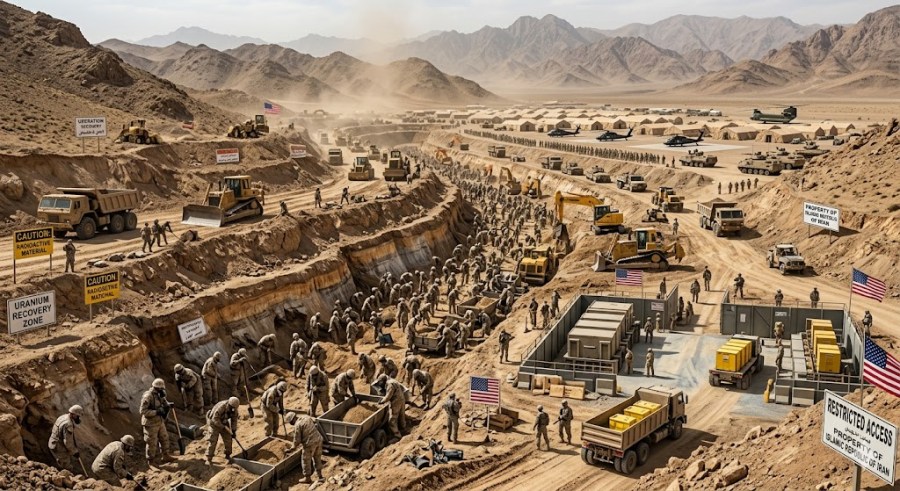
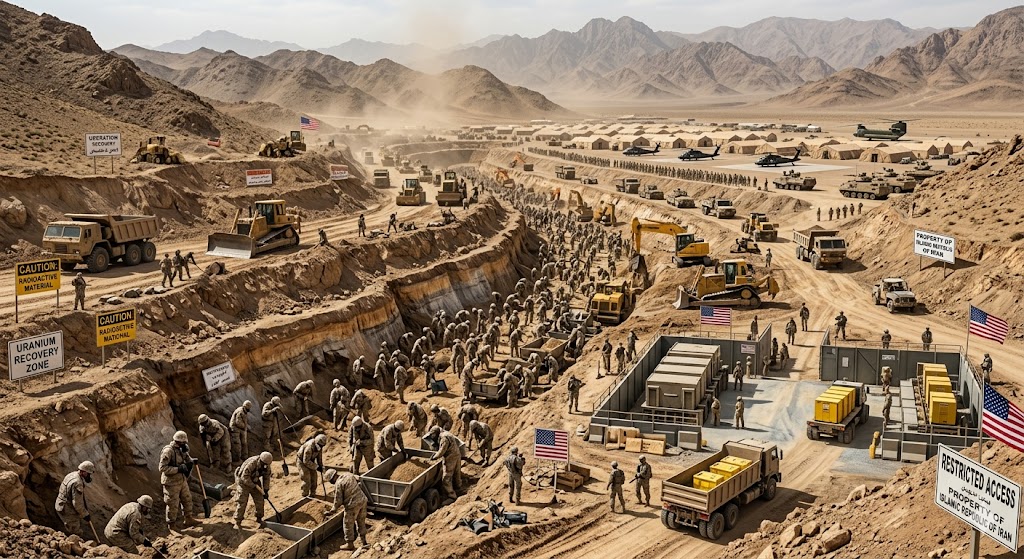
The previous Airstrikes may have spread Uranium Cake to unmanageable risks to the lives of all Troops.
Killing the 50,000 for Iran’s Uranium. Is it worth the costs? Trump is the wrong person for such a task. Hegseth too.
The Technocratic Case for Catastrophe: Beyond the Strike
While the previous discussion centered on the narrative of imminent conflict, a technical deep dive into the radiation risks associated with a “Boots on the Ground” and strategic infrastructure strategy reveals a far more chilling reality. Targeting Iran’s nuclear infrastructure is not a surgical operation; it is a high-stakes ecological gamble. Here, we must focus on two crucial vectors of catastrophic risk that often get ignored in tactical briefings.
Vector 1: The Six-Month Contamination Clock
The administration might dream of a rapid extraction of uranium, but the geological reality of facilities like Fordow, buried 80–90 meters deep, dictates a vastly different timeline. This depth is a crucial tactical variable: any strike that succeeds in breaching the facility won’t just destroy it; it will turn the mountain itself into a massive, fractured chimney for radioactive particulate.
- The Problem of Entombment: If the rock overlying the facility is cracked, subsequent bombing cannot destroy the underground material; it will only atomize it, creating a “dirty bomb” effect from the resulting dust.
- The Six-Month Trap: Because extracting the actual material could take an estimated six months of painstaking work, the site becomes a long-term source of toxic exposure for any surrounding population, as well as for the troops attempting the operation. This means months of continuous environmental monitoring, decontamination efforts, and potential exposure that standard military gear is ill-equipped to handle over long durations.
Vector 2: The Lethality Gradient and “Uncontainable” Fallout
This is where the risk of radiation moves from theoretical to immediate and lethal. We aren’t just discussing statistical increases in long-term cancer risk; we are discussing immediate, battlefield-lethal dosages. In the hours and days following a successful breach of a facility with significant enriched uranium inventories:
- Prompt Radiation Lethality: Near the immediate point of a cracked containment vessel, radiation levels could reach levels where mere minutes of exposure deliver a lethal dose (exceeding 8-10 Sv, or 800-1000 rem), mimicking the extreme scenarios seen during the core meltdown at Chernobyl or the initial criticality accidents at Fukushima. Any specialized recovery team (the “Itch and Twitch” teams) sent in, regardless of their equipment, would be operating on a razor-thin timeline, balancing mission objective against lethal exposure.
- Isotope Nightmare: The concern shifts from immediate lethality to long-distance toxicity. Radioactive cesium-137, which has a 30-year half-life, is chemically similar to potassium and readily enters the food chain. Meanwhile, iodine-131, though short-lived, is rapidly absorbed by the thyroid and is devastating to child health. A deep facility strike doesn’t just spread dust; it vaporizes these isotopes, making the fallout signature vastly more volatile and uncontainable than a standard radiation release.
Conclusion: Weaponizing Geography
By leaning into these technical realities, we see that the strategic decision to target these deeply buried facilities is fundamentally a decision to weaponize the regional geography against itself. The radiation risks are not peripheral byproducts; they are central to the catastrophe, turning a military conflict into a multi-generational crisis that has no defined “victory” condition, only a protracted period of environmental remediation and human suffering.
Trump could kill over 50,000 American Troops from deadly Radiation Exposure.
Hey NERO! Open the Strait of Hormuz!
Iran has acquired weapons now that can sink aircraft carriers. If Trump and Hegseth lose an Aircraft Carrier, what then America? How about the IMMEDIATE removal of two FOOLS.
 thelivingbreathingjamesbrown.com
You must be logged in to post a comment.