
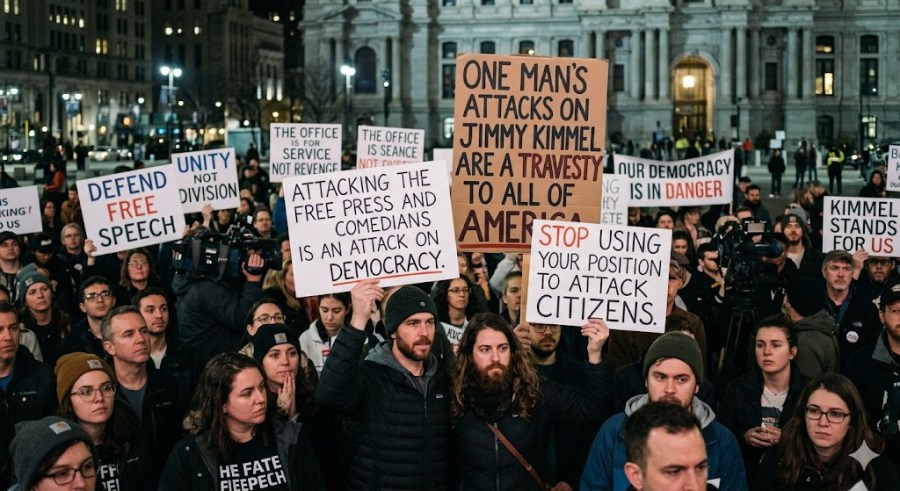
The Administrative Repositioning of the Federal Communications Commission: Regulatory Retribution and the Case of ABC-Disney Broadcast Licenses
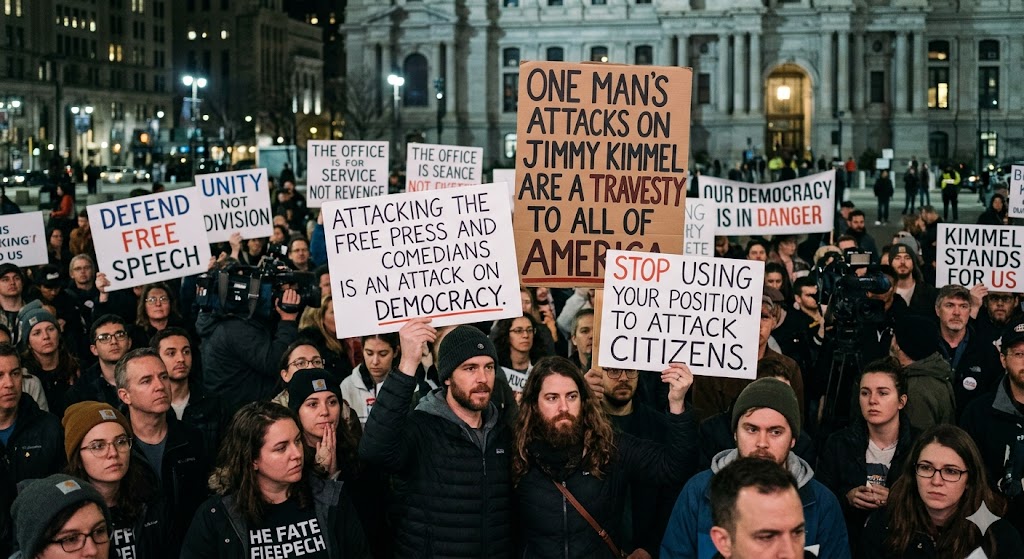
The intersection of administrative power and political discourse has undergone a transformative shift during the second term of the Trump administration, particularly regarding the oversight of the American media landscape. At the heart of this transition is the Federal Communications Commission (FCC), which, under the leadership of Chairman Brendan Carr, has moved from a traditionally passive regulatory posture to a more assertive role in scrutinizing the content and character of legacy broadcast networks. The primary focus of this regulatory escalation has been the American Broadcasting Company (ABC) and its parent organization, the Walt Disney Company. Central to this inquiry is whether specific administrative appointments were made to facilitate the removal of broadcast licenses as a means of silencing dissenting entertainment programming, specifically the late-night comedy hosted by Jimmy Kimmel. An exhaustive analysis of the regulatory record, executive orders, and administrative rhetoric suggests a systematic effort to utilize the “public interest” standard as a mechanism for political retribution.
The Appointment and Ideological Framework of Chairman Brendan Carr
The strategic realignment of the FCC began on January 20, 2025, when President Donald Trump designated Brendan Carr as the Chairman of the Commission. Carr’s elevation was not merely a routine personnel change but the fulfillment of a long-term ideological project aimed at reshaping the relationship between the federal government and the media. Having served as a Commissioner since 2017 and as the agency’s General Counsel prior to that, Carr possessed an intimate understanding of the levers of regulatory power.
Carr’s regulatory philosophy is deeply influenced by his contributions to “Project 2025,” a policy initiative developed by the Heritage Foundation to provide a roadmap for the second Trump term. In his capacity as a lead author for the FCC-related sections of the project’s “Mandate for Leadership,” Carr advocated for a fundamental reevaluation of media regulation, including the curtailment of Section 230 immunity for social media companies and the aggressive use of the FCC’s licensing authority to combat perceived anti-conservative bias.
Upon assuming the chairmanship, Carr initiated the “Build America Agenda,” which ostensibly focused on spectrum availability and infrastructure, but was accompanied by the “Delete, Delete, Delete” initiative. While the latter was framed as a deregulatory effort to eliminate obsolete telecom rules, it also served to consolidate administrative focus on “mass media related antitrust or anticompetitive matters” and the character qualifications of major licensees. Carr’s public statements during this period increasingly characterized legacy national media as a “fake news facade” that needed to be “smashed” to restore public trust.
The Legal Mechanism: Public Interest and Character Qualifications
To understand the administration’s efforts to target ABC, one must examine the specific legal authorities the FCC wields. The Communications Act of 1934 requires the FCC to determine whether a license application or renewal will further the “public interest, convenience, and necessity”. This “public interest” standard, while historically used to ensure localism and diversity of programming, has been reinterpreted by the Carr-led FCC to include the moral and ethical “character” of the licensee.
The FCC’s power to revoke or deny the renewal of a license is governed by Sections 308, 309, and 312 of the Act. Under these provisions, the Commission can evaluate “misconduct which demonstrates the proclivity of an applicant or licensee to deal truthfully with the Commission and to comply with our rules and policies”. While license revocations are historically rare—none having occurred for a major broadcaster in over four decades—the FCC has the authority to “call in” licenses for early renewal if it deems it essential to an investigation.
| Regulatory Citation | Description of Authority | Application in 2025-2026 Context |
|---|---|---|
| 47 U.S.C. § 308(b) | Evaluation of “character” in license applications. | Used to investigate Disney’s corporate hiring (DEI) practices as “unlawful discrimination.” |
| 47 U.S.C. § 309(a) | Determination of “public interest” for grant/renewal. | Reinterpreted to include the accuracy of news coverage and tone of satirical programs. |
| 47 U.S.C. § 312(a) | Authority to revoke licenses for violations or conditions. | Threatened as an “ultimatum” for networks failing to discipline critical entertainers. |
| 47 C.F.R. § 73.1015 | Prohibition of misrepresentation or willful omission. | Invoked in “news distortion” probes regarding war coverage and debates. |
Under Chairman Carr, the definition of “character” has been expanded to encompass a company’s broader corporate conduct, specifically its Diversity, Equity, and Inclusion (DEI) initiatives. Carr has argued that if a company engages in “race- and gender-based discrimination” through its hiring practices, it may lack the character qualifications necessary to be a federal licensee. This creates a potent legal flank: even if a network’s content is protected by the First Amendment, its corporate structure can be targeted as a means of justifying license revocation.
The Chronology of Targeted Action Against Jimmy Kimmel
The administrative focus on Jimmy Kimmel is not an isolated event but a series of escalations that correspond with the comedian’s criticism of the Trump administration. The pattern of behavior from the FCC suggests that the agency’s regulatory agenda is frequently synchronized with President Trump’s public grievances.
The September 2025 Suspension and the “Easy Way” Ultimatum
The first major confrontation occurred in September 2025, following Kimmel’s remarks about the death of conservative influencer Charlie Kirk. Kimmel questioned whether the “MAGA gang” was misrepresenting the suspect’s ideology for political points. Within 24 hours, Chairman Carr appeared on the YouTube program of conservative commentator Benny Johnson and delivered an unprecedented ultimatum to ABC and its parent company, Disney.
Carr explicitly called on broadcasters to “push back on Comcast and Disney” and warned that they could “do this the easy way or the hard way”. He suggested that failure to take action on Kimmel would lead to “additional work for the FCC ahead”. Fearing regulatory retaliation, particularly as Disney and other groups like Nexstar were seeking approval for major acquisitions, the industry responded swiftly. Nexstar and Sinclair temporarily pulled Kimmel’s show from their local affiliates, and ABC suspended the host for one week. President Trump publicly praised the decision, reinforcing the link between administrative pressure and corporate self-censorship.
The Iran War Coverage and “Hoaxes” Allegations
In early 2026, the FCC expanded its scope to include the broader news coverage of major networks. Following a report on Iranian strikes against U.S. tanker aircraft—which President Trump dismissed as “Fake News”—Chairman Carr echoed the president’s criticisms by threatening the licenses of networks airing what he deemed “hoaxes and news distortions”.
Carr’s rhetoric on social media, often posted while visiting the president’s Mar-a-Lago resort, cautioned broadcasters to “correct course before their license renewals come up”. This period saw the reopening of previously dismissed complaints regarding the “equal time rule” and “news distortion,” specifically targeting ABC, CBS, and NBC. Critics noted that while Carr was quick to investigate “The View” for liberal commentary, he declined to revive similar complaints against conservative-leaning outlets.
The April 2026 “Expectant Widow” Incident
The most severe escalation occurred in April 2026. During a parody of the White House Correspondents’ Association (WHCA) dinner, Kimmel joked that First Lady Melania Trump had “a glow like an expectant widow”. The joke was broadcast just days before a real assassination attempt occurred at the WHCA dinner, where a suspect named Cole Tomas Allen was arrested for firing a shotgun near a security checkpoint.
Although the suspect’s manifesto detailed grievances related to the president’s stance on Christianity and Ukraine—making no mention of late-night comedy—the administration immediately blamed Kimmel for inciting the violence. President Trump and the First Lady called for Kimmel’s immediate firing, with the President labeling the joke a “despicable call to violence”.
This was only dark humor. But humor still. And now, is the FCC giving in to the Bully President?
SOShould be arrested and put to Death
On Tuesday, April 28, 2026, the FCC formally ordered an early review of the broadcast licenses for eight ABC-owned and operated stations. These licenses, which were not set to expire until between 2028 and 2031, were suddenly required to be refiled for renewal within 30 days. The move was widely seen by industry analysts and Democratic Commissioner Anna Gomez as a “political stunt” and “illegal jawboning” intended to intimidate Disney into firing Kimmel.
Statistical Profile of Targeted ABC Stations
The FCC’s decision to call in licenses affects ABC’s “Owned and Operated” (O&O) stations, which are the most lucrative and influential parts of its broadcast empire. By targeting these specific stations, the FCC hits Disney in its primary revenue centers.
| Station | Market | Channel | Current License Expiration | New Renewal Deadline |
|---|---|---|---|---|
| WABC-TV | New York, NY | 7 | 2031 | May 28, 2026 |
| KABC-TV | Los Angeles, CA | 7 | 2030 | May 28, 2026 |
| WLS-TV | Chicago, IL | 7 | 2029 | May 28, 2026 |
| WPVI-TV | Philadelphia, PA | 6 | 2031 | May 28, 2026 |
| KGO-TV | San Francisco, CA | 7 | 2030 | May 28, 2026 |
| KTRK-TV | Houston, TX | 13 | 2030 | May 28, 2026 |
| WTVD | Raleigh-Durham, NC | 11 | 2028 | May 28, 2026 |
| KFSN-TV | Fresno, CA | 30 | 2030 | May 28, 2026 |
The logistical and legal burden of refiling these licenses simultaneously, while also defending against an investigation into “unlawful discrimination” (DEI), represents a significant operational strain on Disney’s legal and executive teams.
The Mechanism of “Jawboning” and Corporate Coercion
The administrative strategy employed by the Carr-led FCC is a textbook case of “jawboning”—the use of informal government pressure to coerce private entities into suppressing speech that the government cannot legally censor directly. Because the First Amendment and the Communications Act expressly prohibit the FCC from censoring content, the agency uses the threat of the license renewal process to achieve its goals.
Process as Punishment
Legal experts, including former FCC Chairman Tom Wheeler and attorney Andrew Jay Schwartzman, have argued that the FCC’s threats are “hollow” in the long term because license revocations would likely be overturned by the D.C. Circuit Court of Appeals. However, the “process is the punishment”. A license review triggers a “hearing designation order,” which can take years to resolve and costs millions in legal fees. For a publicly traded company like Disney, the uncertainty of a pending license revocation can depress share prices and alienate advertisers, making it more cost-effective to simply fire the controversial host than to fight the government in perpetuity.
Merger Reviews as Leverage
The administration has also utilized its authority over media mergers to enforce ideological compliance. A primary example is the merger between Paramount’s CBS and Skydance. Approval was reportedly granted only after Paramount agreed to settle a defamation lawsuit with Trump for $16 million and canceled Stephen Colbert’s show, another program frequently critical of the administration. Chairman Carr later praised the new CBS ownership for committing to “root out bias” and ensuring “diversity of viewpoints,” a clear signal that regulatory approval is now contingent on the nature of a network’s content.
Constitutional and Institutional Resistance
The move to weaponize the FCC has encountered significant pushback from various sectors. Commissioner Anna Gomez has been the most vocal internal critic, stating that the commission “doesn’t get to decide whether the news coverage of those in power is acceptable” and that these threats “violate the First Amendment and will go nowhere”.
The Dissenting View: Institutional Independence
Gomez and other critics argue that the FCC was designed to be an independent agency, insulated from the direct whims of the executive branch. They contend that Carr has transformed the agency into a “political organization” using policy to achieve political goals. Even some prominent Republicans, such as Senator Ron Johnson and Senator Ted Cruz, have expressed unease with the FCC’s tactics. Senator Cruz specifically compared Carr’s “easy way or hard way” ultimatum to a “mafioso” shakedown.
The First Amendment Defense
The primary legal defense for ABC and Disney rests on the high constitutional bar for government interference in speech. The courts have traditionally recognized that “political satire is one of the oldest and most important forms of free speech”. Furthermore, the Supreme Court’s “state action doctrine” generally prevents the government from using private entities as conduits for censorship. If Disney can prove that its decisions regarding Kimmel were made under government duress, it may have a strong case for constitutional overreach.
Broader Administrative Context and Media Influence
The targeting of ABC is part of a larger administrative effort to reshape the American media ecosystem. This includes:
- Defunding Public Media: President Trump signed an executive order, “Ending Taxpayer Subsidization of Biased Media,” which aimed to cut funding for PBS and NPR.
- Restricting Press Access: The administration has revoked the press passes of outlets whose coverage it considers unfavorable, including CNN, The Washington Post, and The New York Times. Associated Press reporters were reportedly banned from Air Force One for refusing to use the administration’s preferred term “Gulf of America”.
- Judicial Threats: The President has frequently suggested that news organizations should face “charges for treason” for disseminating information he deems false.
| Administration Action | Primary Objective | Impact on Press Freedom |
|---|---|---|
| FCC Early License Review | Silencing critical entertainment/satire. | High: Creates “chilling effect” on all licensees. |
| Defunding NPR/PBS | Removing non-commercial competition. | Moderate: Limits diverse information sources. |
| Press Pass Revocations | Controlling the narrative in the White House. | Moderate: Reduces transparency. |
| Executive Order on AI | Controlling digital information flows. | Unknown: Potential for algorithmic bias. |
| Lawsuits against NYT/WSJ | Financial exhaustion of critics. | High: Uses the legal system as a weapon. |
The Role of First Lady Melania Trump
The First Lady’s involvement in the Kimmel controversy is notable for its directness. While previous First Ladies have occasionally criticized media portrayals, Melania Trump’s public demand for a network to “take a stand” and fire a host marks a shift in the role of the East Wing in administrative affairs. Her characterization of Kimmel’s joke as “hateful and violent rhetoric” provided the moral and political justification for Chairman Carr’s subsequent regulatory order.
The administration’s narrative successfully conflated the “expectant widow” joke with the actual shooting at the WHCA dinner, despite evidence that the shooter, Cole Tomas Allen, was motivated by unrelated political grievances. This framing allowed the White House to argue that Kimmel’s speech was not merely distasteful but was a “despicable call to violence” that necessitated federal intervention.
Economic Resilience and Corporate Strategy
The Walt Disney Company has signaled that it is prepared to fight the FCC’s order through “appropriate legal channels”. Under the leadership of new CEO Josh D’Amaro, the company has emphasized its “long record of operating in full compliance with FCC rules” and its commitment to the First Amendment.
However, the conflict poses a significant challenge for Disney. As a “Fortune 50 company,” Disney must balance its commitment to creative freedom with its fiduciary responsibility to shareholders. If the regulatory pressure begins to affect other parts of its business—such as theme park permits, international mergers, or copyright protections—the company may face internal pressure to appease the administration.
The Shooting Incident and the Manifesto of Cole Tomas Allen
A critical component of the administration’s argument for shutting down Kimmel’s show is the alleged connection between his monologue and the violence at the WHCA dinner. On Saturday, April 25, 2026, 31-year-old Cole Tomas Allen, a tutor and engineer from Torrance, California, attempted to charge a security checkpoint armed with a 12-gauge shotgun and a.38-caliber pistol.
The investigation by the FBI and the Secret Service revealed that Allen had left a “manifesto” in which he described himself as a “Friendly Federal Assassin”. The document outlined a list of grievances that included the president’s lack of respect for Christianity, the decision to cut off funding for Ukraine, and allegations that the country was led by a “traitor”. Crucially, the manifesto did not mention Jimmy Kimmel, late-night television, or the “expectant widow” joke. Despite this, White House Press Secretary Karoline Leavitt blamed the incident on “systemic demonization” by the left, and White House Communications Director Steven Cheung explicitly linked the shooting to Kimmel’s joke, accusing him of “making a disgusting joke about assassinating the President”.
Long-Term Implications for Media Governance
The actions taken by the FCC in the 2025-2026 period suggest a fundamental shift in the American approach to media governance. If the “public interest” standard can be successfully weaponized to target satirical content, the traditional independence of the American press may be permanently compromised.
The Rise of Government-Aligned Media
Critics like Jameel Jaffer of the Knight First Amendment Institute warn that the goal of the administration is the consolidation of control over the national narrative. If major networks can be cowed into firing critics or editing news to avoid regulatory “additional work,” the result could be a media landscape where only government-approved commentary is broadcast. This process, referred to by some as the “Orbanization” of America, relies on using the “heavy hand of government” to tip the scales in favor of supportive media outlets.
The Durability of Institutional Safeguards
The ultimate resolution of the Disney-ABC license dispute will likely rest with the federal judiciary. The First Amendment remains a robust protection for satirical speech, and the courts have historically been skeptical of administrative attempts to bypass censorship prohibitions through the back door of licensing. However, the time and cost required to vindicate these rights in court may already be achieving the administration’s goal: creating an environment where media giants would rather self-censor than risk a fight with the state.
Final Assessment of Administrative Positioning
The evidence confirms that President Trump placed Brendan Carr in the role of FCC Chairman with the explicit goal of utilizing the agency’s licensing and regulatory authorities to influence the media landscape. The specific targeting of ABC-owned stations, occurring immediately after White House demands for the firing of Jimmy Kimmel, demonstrates a clear causal link between political grievances and regulatory actions.
While the administration has dressed these actions in the language of DEI investigations and news distortion policies, the underlying mechanism is one of administrative retribution. By calling in licenses years ahead of schedule and framing satirical jokes as incitements to violence, the administration has established a framework for “jawboning” that threatens the fundamental principles of a free and independent press. The future of ABC’s licenses, and the broader independence of American broadcast media, will depend on the ability of the judiciary to reinforce constitutional boundaries against the expanding reach of the administrative state. fcc.govBrendan Carr – Federal Communications CommissionOpens in a new windowdocs.fcc.govCarr Issues Statement on Designation as Chairman of the FCC by President TrumpOpens in a new windowen.wikipedia.orgBrendan Carr – WikipediaOpens in a new windowperkinscoie.comWhat To Expect From the New Administration FCC | Perkins CoieOpens in a new windowen.wikipedia.orgSuspension of Jimmy Kimmel Live! – WikipediaOpens in a new windowfcc.govChairman Carr Highlights Wins Delivered in 2025 | Federal Communications CommissionOpens in a new windowdocs.fcc.govPolicies regarding Character Qualifications in Broadcast Licensing… – Federal Communications CommissionOpens in a new windowft.comTrump administration launches Disney probe after Jimmy Kimmel’s Melania jokeOpens in a new windowms.nowFCC chair Brendan Carr touted Trump’s Orbanization of America at CPAC – MS NOWOpens in a new windowjustice.govContemporary Media, Inc. v. FCC – Opposition – Department of JusticeOpens in a new windowwashingtonpost.comFCC orders review of Disney’s licenses after Trump’s Kimmel criticismOpens in a new windowbroadbandbreakfast.comDaniel Suhr: Broadcast License Revocation Fact Check – Broadband BreakfastOpens in a new windowgvwire.comFCC to Order Early License Reviews of Disney-Owned ABC Stations, Source SaysOpens in a new windowtheguardian.comFCC orders review of ABC licenses after Jimmy Kimmel’s Melania …Opens in a new windownewrepublic.comTrump Sics FCC on Disney as Jimmy Kimmel War Ramps Up Again | The New RepublicOpens in a new windowsemafor.comFCC challenge ABC broadcast licenses | SemaforOpens in a new windowcbsnews.comFCC chair threatens broadcast licenses amid Trump’s criticism of …Opens in a new windowcbsnews.comTrump says TV networks covering him negatively should “maybe” have their licenses revoked – CBS NewsOpens in a new windowdocs.fcc.govSeptember 24, 2025 – Federal Communications CommissionOpens in a new windowms.nowHow Brendan Carr’s not-so-veiled threats could work in Jimmy Kimmel’s favorOpens in a new windowipi.mediaUnited States: IPI condemns Trump administration threats against …Opens in a new windowksl.comTrump calls for ABC broadcast licenses to be revoked after reporter’s question | KSL.comOpens in a new windowtheguardian.comRepublican rebukes FCC chair’s threats to revoke broadcast licenses over Iran warOpens in a new windowaa.com.trFCC chair warns broadcasters could lose licenses amid Trump criticism of Iran war coverage – Anadolu AjansıOpens in a new windowcbsnews.comFCC Chair Brendan Carr says broadcast licenses are not a “property right,” as Trump bemoans coverage of Iran war – CBS NewsOpens in a new windowpoynter.orgTrump and his FCC chair are barking at the press. Even without a bite, the threat matters.Opens in a new windowkesq.comFCC plans to challenge ABC station licenses amid Kimmel controversy – KESQOpens in a new windowwashingtonpost.comOpinion | The funniest thing about Jimmy KimmelOpens in a new windowdemocracynow.orgSuspect in White House Correspondents’ Dinner Shooting Charged with Attempted Assassination of TrumpOpens in a new windowcbsnews.comWhat we know about the suspect in shooting at White House Correspondents’ DinnerOpens in a new windowlatimes.comLive updates: Suspect Cole Tomas Allen was charged with trying to assassinate President TrumpOpens in a new windowglobalnews.caU.S. FCC orders early review of ABC licenses after Jimmy Kimmel’s Trump jokeOpens in a new windowdailyherald.comFCC orders review of Disney’s licenses after Trump’s Kimmel criticismOpens in a new windowreason.comTrump Administration’s Review of ABC’s Broadcast Licenses Looks Like ‘Illegal Jawboning’Opens in a new windowtechfreedom.orgMarch 20, 2026 The Honorable Brendan Carr Federal Communications Commission 45 L Street NE Washington, DC 20554 Dear Chairman Ca – Tech FreedomOpens in a new windowkvia.comTrump administration challenges ABC station licenses amid Kimmel controversyOpens in a new windowen.wikipedia.orgDonald Trump’s conflict with the news media – WikipediaOpens in a new windowtheguardian.comBrendan Carr: is Trump’s FCC chair uniquely powerful or a paper tiger? – The GuardianOpens in a new windowfreemalaysiatoday.comUS regulator orders review of ABC license after Trump criticises KimmelOpens in a new windowasatunews.co.idWhite House Demands ABC Fire Jimmy Kimmel Over RemarkOpens in a new windowabs-cbn.comTrumps attack Jimmy Kimmel, White House blames rhetoric from the left after gala shootingOpens in a new windowstraitstimes.comJimmy Kimmel joke enrages White House and tests Disney’s new CEOOpens in a new windowfreepress.netFCC Chairman Carr’s Threat to Pull ABC Broadcast Licenses Is an Unconstitutional Attack on Free Speech | Free PressOpens in a new window
The current situation involving the FCC, ABC-Disney, and the White House is a developing conflict that touches on significant questions of constitutional law, regulatory independence, and the First Amendment.
On April 28, 2026, the FCC—led by Chairman Brendan Carr—ordered an early review of eight local ABC broadcast licenses. While the FCC cites an investigation into ABC’s diversity, equity, and inclusion (DEI) policies and anti-discrimination rules, the move coincided with public demands from President Trump for ABC to fire Jimmy Kimmel following a monologue about the First Lady.
For those concerned about how democratic institutions can navigate such moments, legal experts and historians point to several layers of protection and recourse within the American system:
1. The Judicial “Firewall”
The most significant check on regulatory action is the federal court system. Any attempt by the FCC to revoke or refuse a license renewal is subject to judicial review.
- The First Amendment: Courts have a long history of striking down government actions that appear to be “regulatory retribution” or viewpoint discrimination. If a court finds that a license is being targeted due to the content of a late-night joke or news coverage, the action would likely be declared unconstitutional.
- The Administrative Procedure Act (APA): This law requires federal agencies to prove their actions are not “arbitrary or capricious.” The FCC would have to provide substantial, evidence-based reasons for revoking a license that have nothing to do with political speech.
2. Structural Barriers within the FCC
The process for revoking a license is intentionally “arduous and long,” as noted by FCC Commissioner Anna Gomez.
- License vs. Network: The FCC does not license “ABC” as a national network; it licenses individual local stations. To effectively “shut down” a network, the FCC would have to win separate legal battles for dozens of stations across different jurisdictions, each with its own record of public service.
- Internal Dissent: The FCC is designed as a multi-member commission. While the Chairman sets the agenda, other commissioners can issue public dissents that provide the legal and logical “roadmap” for defense attorneys to use in court.
3. Corporate and Civil Legal Defense
Large entities like Disney have the resources to engage in “head-on” legal challenges.
- Due Process: Broadcasters have the right to a “hearing designation order,” a multi-month or multi-year trial-like process where the government must prove “character disqualification.”
- Public Interest Standard: Broadcasters can defend their licenses by demonstrating their record of serving local communities with news, emergency alerts, and public interest programming—records that are often difficult for regulators to dismiss legally.
4. Legislative and Public Oversight
While the executive branch exerts influence through appointments, Congress retains “power of the purse” and oversight authority.
- Oversight Hearings: Congress can call FCC officials to testify under oath about the motivations behind specific investigations.
- Public Opinion: Institutional overreach often triggers a “backlash effect” where public pressure and civil liberties groups (like the Freedom of the Press Foundation) mobilize to defend the independence of the media.
In summary, while regulatory tools can be used to exert pressure, the American system is built with multiple “tripwires”—primarily the independence of the judiciary—specifically designed to prevent a single individual from using government agencies to silence critics or private citizens.
Trump has proven himself to be extremely selfish, and a real Bully. Unleashing verbal threats and taunts on anyone he deems has made him mad. And 😠 is apparently something Trump does every day, especially at night on Truth Social.


You must be logged in to post a comment.