
The rapid shifts between hostile threats and sudden diplomatic openings in Donald Trump’s foreign policy—particularly regarding Iran—are part of a distinct, deliberately chaotic approach to negotiation. Foreign policy analysts and historians often debate whether this dynamic represents a high-stakes strategic framework or a volatile liability.
News of the United States – NOTUS
Understanding the Strategy: “The Madman Theory”
Trump’s pattern of abruptly shutting down talks, issuing extreme military warnings, and then re-invoking diplomacy closely mirrors what foreign policy scholars refer to as The Madman Theory. First popularized during Richard Nixon’s presidency, this strategy relies on convincing adversaries that a leader is unpredictable, volatile, and willing to use maximum force without typical constraints.
News of the United States – NOTUS
- The Intent: Proponents of this approach argue that unpredictability keeps opponents off-balance, deprives them of leverage, and forces them to make concessions out of fear that the alternative is an uncontrolled escalation. White House officials and allies often view this volatility as an asset that creates maximum bargaining leverage. NOTUS
- The Risk: Critics argue that foreign policy requires consistent signaling. If adversaries believe a leader’s terms are constantly shifting or that commitments won’t hold, negotiations can break down entirely, leaving military conflict as the default outcome.
Key Perspectives on Trump’s Approach to Conflict
Critics’ Critique: Strategic Incoherence and Decision-Making Isolation
Critics, including former national security officials and diplomatic experts, point to several systemic vulnerabilities in Trump’s foreign policy execution:
- Lack of Clear Endgames: Opponents contend that applying coercive pressure without a clear, achievable diplomatic exit strategy makes it difficult to convert military leverage into a lasting deal.
- Adviser Echo Chambers: Concerns are frequently raised regarding the internal dynamics of his administrations. Critics argue that a preference for absolute loyalty can lead to an environment dominated by “yes men,” where counter-arguments are minimized, dissenting military or intelligence assessments are dismissed, and decisions are driven by personal instincts rather than structured institutional analysis.
- Erosion of Credibility: Frequent reversals—such as threatening major military action one day and offering face-to-face summits the next—can lead both allies and enemies to view red lines as flexible bluffs rather than firm policies.
Supporters’ Perspective: Unconventional Pressure and Disruption
Supporters view this style not as incompetence, but as a deliberate rejection of established diplomatic norms that they believe failed past administrations. Their rationale includes:
- Disrupting Standard Escalation: By refusing to follow standard diplomatic protocols, Trump prevents adversaries from predicting U.S. timelines or thresholds, forcing them to take American threats seriously.
- Direct Bilateral Leverage: Supporters argue that personal involvement and direct pressure bypass bureaucratic delays, creating immediate openings for high-level breakthroughs that traditional diplomacy fails to achieve.
- Combining Blockades with Openings: Defenders highlight that maintaining a heavy economic blockade while keeping the door open for direct communication exerts economic strain on the opponent while retaining a pathway to a deal.
The Reality of Modern Conflict
Winning or managing a modern international conflict requires balancing military capabilities with strategic alignment, economic sanctions, and stable diplomatic channels. Whether Trump’s high-leverage, erratic style ultimately achieves a durable non-proliferation agreement or leads to further instability remains one of the central debates in contemporary international relations.
A Roundtable Debate: Path to Peace in the Middle East
Participants:
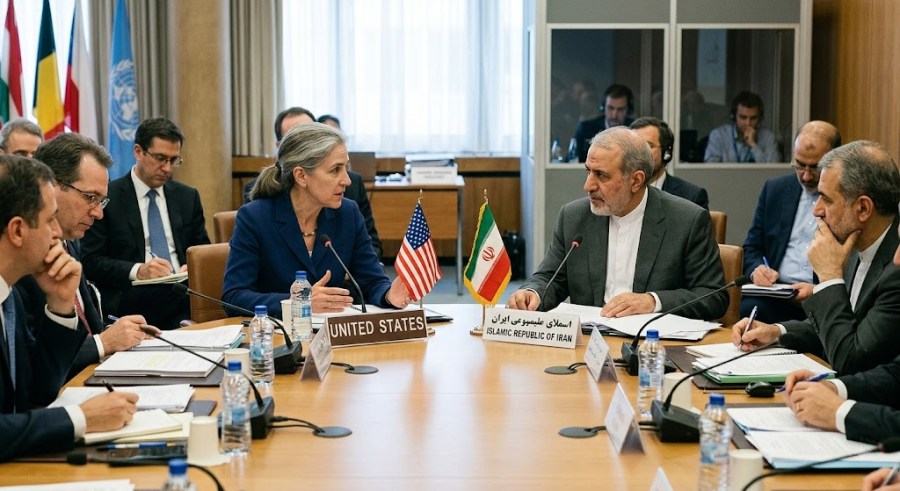
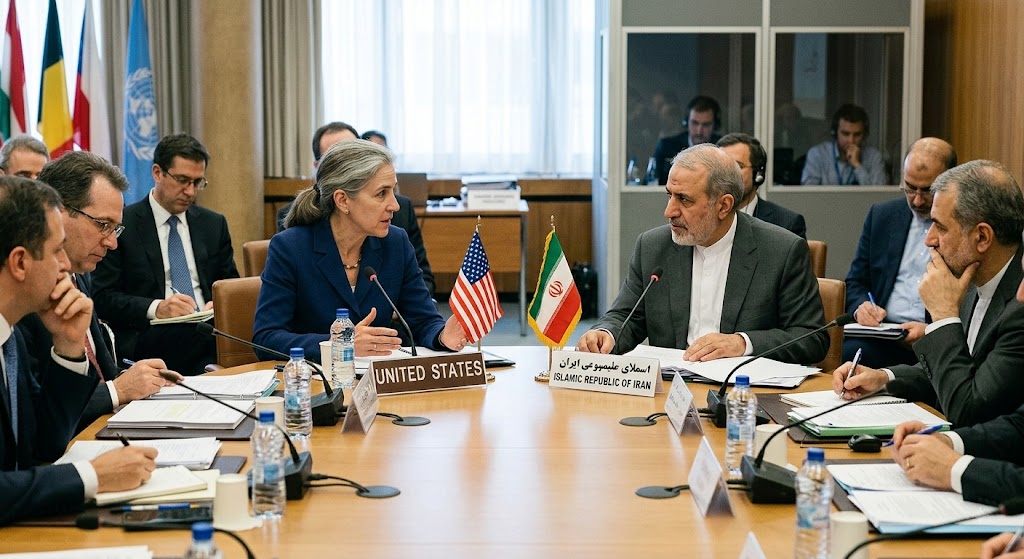
- Representing the State of Israel: Ambassador Ron Dermer, Minister for Strategic Affairs.
- Representing the United States of America: Ambassador Linda Thomas-Greenfield, U.S. Permanent Representative to the United Nations.
- Representing the Islamic Republic of Iran: Abbas Araghchi, Deputy Foreign Minister.
Moderator: Let’s begin. Our goal is to explore a realistic path to a durable peace, or at least a stable de-escalation, between your nations.
Round 1: Core Interests and Red Lines
Moderator: Ambassador Thomas-Greenfield, the U.S. has a unique role in this tri-lateral dynamic. What is the fundamental American interest here?
Ambassador Linda Thomas-Greenfield (USA):
Our primary interest is regional stability, rooted in a non-proliferation regime that is absolute. We bring to the table the full weight of the international financial system and a network of security alliances. To be clear: The United States will not tolerate an Iran that has weaponized nuclear energy. Not only is it a threat to Israel, but it would also spark a nuclear arms race across the entire Middle East, destabilizing global energy supplies and locking the United States into another century of conflict in the region. Our “red line” is non-negotiable: verification. Any deal must give the IAEA absolute, unfettered access to Iran’s entire supply chain, from mining to manufacturing. In return, we can offer what Iran’s economy desperately needs: the path to sanctions relief.
Moderator: Mr. Araghchi, Iran is currently under that weight of sanctions. How do you respond to the American demand for non-proliferation and verification?
Deputy Foreign Minister Abbas Araghchi (Iran):
First, we must correct the premise. Iran has a peaceful, civilian nuclear program, which is our sovereign right under the NPT. Our primary interest is economic sovereignty and the removal of the catastrophic, unilateral sanctions that are an act of war against our people. We have proven our good faith. We signed the JCPOA in 2015, and the International Atomic Energy Agency confirmed 15 times that we complied perfectly. But the United States broke its word. The U.S. proved that its signature means nothing. For us, there are two non-negotiable red lines:
- Sovereignty: Our defense program—including our peaceful nuclear energy—is not up for negotiation. We cannot trust a system where our economy is a hostage to the changing of the guard in Washington. We require permanent guarantees of sanctions relief that cannot be reversed by a single man in the White House.
- Dignity: Iran will not be treated like a defeated power.
Moderator: Ambassador Dermer, you represent the party most directly targeted by Iranian threats. What is Israel’s absolute requirement?
Ambassador Ron Dermer (Israel):
Israel brings to the table a single word: Survival. Our people have learnt that when a regime tells you they are going to destroy you, they mean it. We must face the grim reality. For decades, Iran has had two paths toward destroying the Jewish State. The first is the direct path: its nuclear program. We have exposed their secret archives. They lied about it for years. They have a weapons program. We cannot and will not trust any agreement that permits Iran to maintain any uranium enrichment, because enrichment is the path to a bomb. The second path is indirect: its ring of fire. While Araghchi speaks of “dignity” and “sanctions relief,” Iran funds its proxy armies across the region—Hezbollah, Hamas, the Houthis—arming them with precision-guided missiles to attack Israeli cities. Our red line is this: a deal that addresses only the nuclear program, while leaving Iran free to fund terror proxies to attack us, is not a peace treaty. It is a death sentence.
Round 2: Reconciling the Irreconcilable
Moderator: It seems we have three distinct realities.
- USA: “Nuclear freeze in exchange for economy.”
- Iran: “Sovereignty and permanently guaranteed economy before we freeze anything.”
- Israel: “Zero nuclear program and zero proxy support, or we maintain the military option.”
Moderator: Ambassador Thomas-Greenfield, how do you manage Israel’s existential fear against Iran’s demand for economic sovereignty?
Ambassador Linda Thomas-Greenfield (USA):
This is the heart of the challenge. Our previous attempts were linear—first nuclear, then regional behavior. That did not satisfy Israel. We must evolve our strategy to be comprehensive. We understand that an Iran with billions in sanctions relief, but with an unfettered missile program, remains a profound threat to Israel and our other allies. We propose a phased agreement. We can offer initial sanctions relief—on humanitarian goods, food, and civil aviation—in exchange for a full cap on enrichment. The second phase of major economic relief must be coupled with measurable, verifiable reductions in Iran’s proxy funding and a verifiable ban on advanced missile testing.
Moderator: Mr. Araghchi, the U.S. is linking its core offer (the economy) to two issues you said were non-negotiable (defense and regional influence). Can Iran accept a deal that limits its regional role?
Deputy Foreign Minister Abbas Araghchi (Iran):
Iran does not create “instability.” The instability is created by the 50,000 American troops that surround us, and by Israel’s unlawful occupation of Palestinian territory. If you want to discuss “proxy warfare,” we can discuss the billions of dollars of offensive weapons the U.S. sells to the region to threaten Iran. You want regional security? The answer is a regional collective security system, where the Middle East manages its own affairs without Western interference. As for the U.S. suggestion of a “phased agreement”: This sounds like another American trap. “Wait” and “verify” while they demand we disarm ourselves. If they want trust, they must make the first major move: lift the sanctions on oil and banking to prove their signature still means something. Only then can we discuss subsequent technical constraints on our peaceful program.
Round 3: The Threat of Failure
Moderator: We are arriving at a dangerous stalemate. Let us discuss the alternative to negotiation. Ambassador Dermer, Israel is famous for its “Begin Doctrine”—the idea that Israel will not allow a hostile regional power to develop nuclear weapons, as it showed with strikes in Iraq and Syria. Is Israel prepared to strike Iran’s nuclear facilities, even if it leads to regional war?
Ambassador Ron Dermer (Israel):
Israel seeks peace. We are the architects of the Abraham Accords, proving we can build dynamic, peaceful futures with neighbors who seek the same. But let no one mistake Israel’s restraint for weakness. We have shown our capability to strike Iran in the Twelve-Day War. We are ready to strike again if necessary. We prefer a diplomatic path, but only a real diplomatic path. We do not want another flawed deal that provides a gilded path to a nuclear arsenal while funding a terror war against us today. If the only options are an Iran with a bomb, or an Israel that must stop them, Israel will act.
Moderator: Minister Araghchi, if Israel strikes your nuclear facilities, how does Iran respond?
Deputy Foreign Minister Abbas Araghchi (Iran):
We are aware of Israel’s threats. Let them be aware that Iran has a strong military. If they make that mistake, our response will be immediate, decisive, and widespread. They may strike our peaceful facilities, but they cannot erase our knowledge. And they will learn that they have not just a regional power. They will find themselves in a war that they cannot end, a war that will destroy their illusion of safety and draw the whole region into a chaos they cannot control. Do they want the ultimate sacrifice? Then let them try.
Moderator: Ambassador Thomas-Greenfield, you are in the unenviable position of managing an ally that is ready to strike, and an adversary that is ready to retaliate. What does the U.S. do if talks fail?
Ambassador Linda Thomas-Greenfield (USA):
The U.S. brings a unique offer to this table: a stable future. Failure means a reality that no one here truly wants. Failure means we enter an unpredictable era of “active containment.” We will further escalate our “maximum pressure” sanctions, crippling Iran’s economy even more. We will increase our military footprint in the Gulf, and we will back our allies. Let me be absolutely clear to Iran: The U.S. does not seek war. But if our ally, Israel, is under attack from a regime that threatens to annihilate it, or if our bases are struck by an Iranian proxy, the United States will defend its partners and interests with overwhelming force. We are not asking you to trust each other. We are asking you to recognize that the alternative to this room is a catastrophe. We are here to offer the only path to a stable, prosperous Middle East: a verified, enforceable, comprehensive deal.
Closing
Moderator: The lines are clear. Israel brings its existential need for survival. Iran brings its demand for sovereign dignity. The USA brings the scale of global power and the promise of economic integration. The final question remains: Do you three see enough daylight between your positions to stay at this table?


You must be logged in to post a comment.