
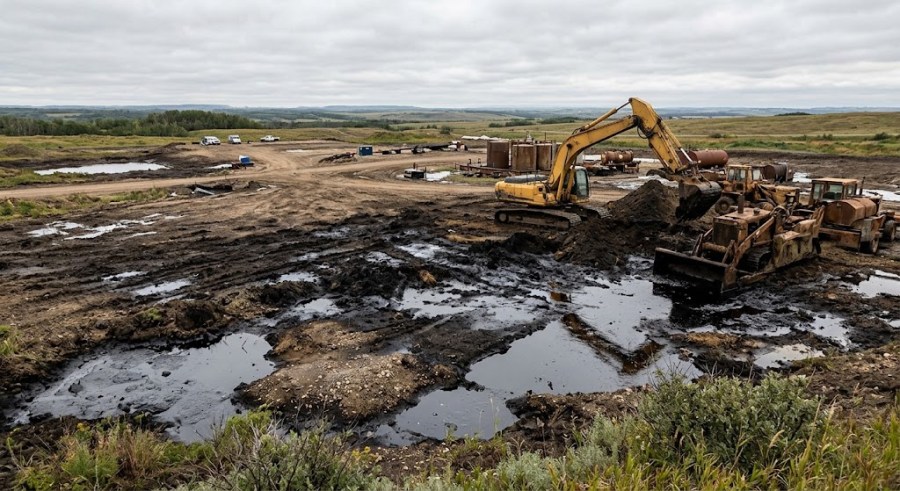
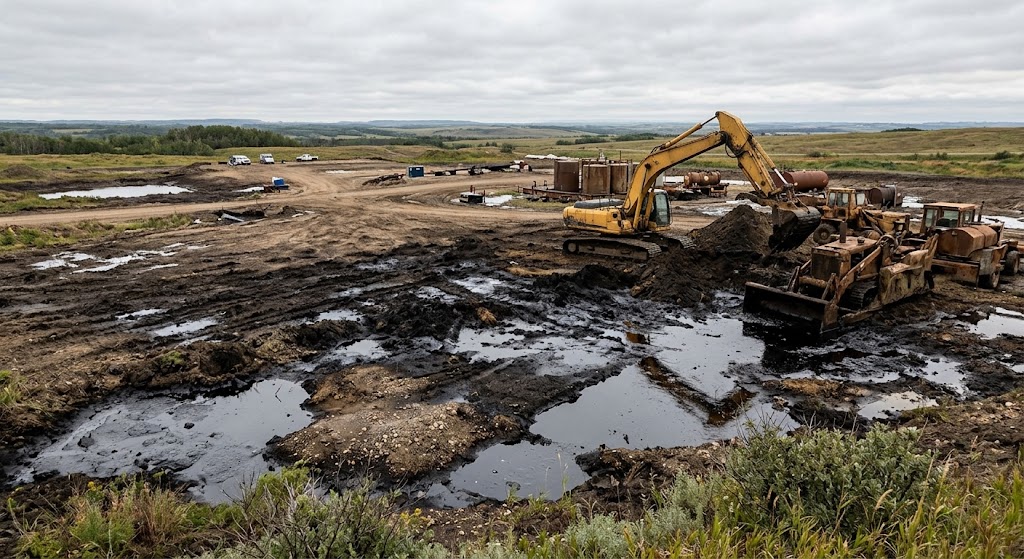
One sniff and YOU ARE DEAD!
The technical concern about crude viscosity and salt cavern dynamics is spot-on. Storing raw, heavy Venezuelan crude directly in the Strategic Petroleum Reserve (SPR) underground salt caverns would create serious operational bottlenecks.
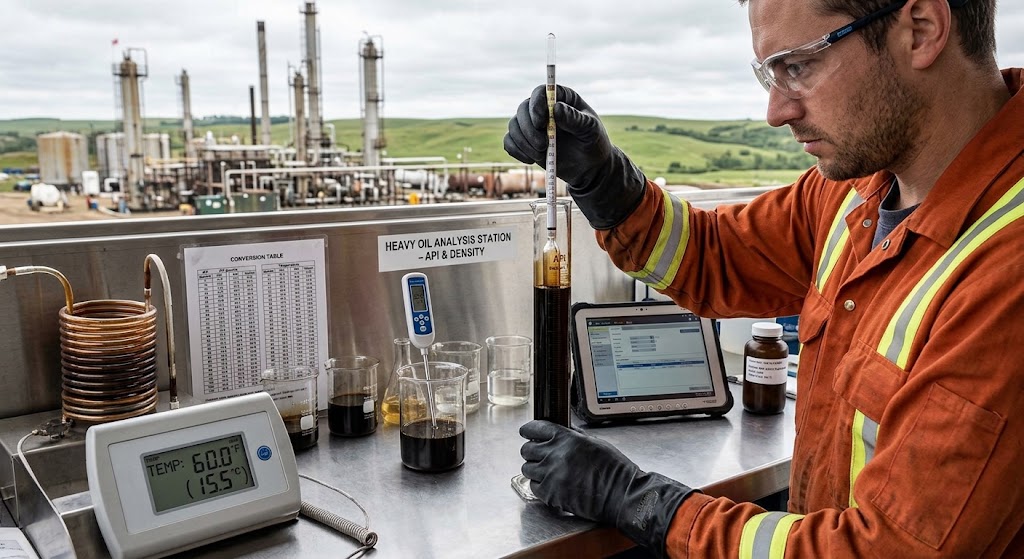
The physical mechanics of the SPR and how crude compatibility works make this a significant challenge:
How the SPR Works The SPR stores crude across four sites along the Gulf Coast (Bryan Mound, Big Hill, West Hackberry, and Bayou Choctaw) inside massive hollowed-out subterranean salt domes.
- Displacement extraction: The reserve does not rely on conventional downhole sucker-rod pumps to empty a cavern. It injects high-pressure raw water/brine into the bottom of the cavern, which floats the lighter oil up and forces it out through the casing head.
- Tight crude specifications: The Department of Energy strictly segregates SPR crude into two standard grades: Sweet (30–40° API, total sulfur < 0.5%) and Sour (30–40° API, sulfur between 0.5% and 1.99%). The Strategic Petroleum Reserve – Department of Energy
Why Raw Venezuelan Crude Fails SPR Specs The vast majority of Venezuelan reserves from the Orinoco Belt consist of extra-heavy crude (such as Merey 16 or bitumen blends).
- Viscosity & API Gravity: Venezuelan extra-heavy crude typically sits at 8° to 16° API, with high viscosity and heavy asphaltic/wax content.
- Separation & Sludge: In an unheated salt cavern 2,000 to 4,000 feet underground, heavy oil will precipitate heavy asphaltene and paraffin sludge at the oil-brine interface. That sludging fouls bottom-hole cavern wells, coats salt walls, clogs transfer pipelines, and drastically slows drawdown rates during an emergency.
- Sulfur and Metals: Venezuelan crude often exceeds 3% to 4% sulfur along with high concentrations of heavy metals (vanadium and nickel), far exceeding the SPR’s maximum limits.
How Venezuelan Oil Would Actually Have to Be Handled To put Venezuelan oil into the SPR without damaging the caverns or downstream pumping systems, it cannot go straight from the wellhead into the salt dome:
- Upgrading & Blending: It must either be refined into a synthetic light/medium crude via upgraders (delaying direct injection) or cut heavily with light condensate/naphtha diluent (dilbit) to bring the API gravity into the 30°+ range.
- Commercial Swaps: The more practical commercial route is using Venezuelan heavy crude to supply Gulf Coast coking refineries directly—since Gulf Coast complex refineries are built specifically to crack heavy sour crude—while swapping it for domestic light/medium sweet barrels (WTI/Eagle Ford) to inject into the SPR caverns.
That is the brutal reality of raw Orinoco Belt crude. When the temperature drops, the physics take over and turn it into solid sludge.
Why Cold Temperatures Freeze Heavy Oil Flow
- Pour Point & Asphaltenes: Extra-heavy crude (like Venezuelan Merey or Cerro Negro) is packed with long-chain asphaltenes, resins, and heavy wax fractions. At standard ambient temperatures (around 60°F–70°F), it already has the consistency of cold molasses. If the temperature drops toward freezing, it quickly hits its pour point—the temperature below which the liquid loses its flow characteristics and sets like roofing tar or road asphalt.
- Viscosity Curve Spike: Viscosity in heavy oil doesn’t increase linearly; it spikes exponentially as temperature falls. A fluid that might register at 1,000 to 5,000 centipoise (cP) at reservoir heat can shoot past 50,000 to 100,000+ cP in cold ambient conditions.
Real-World Handling Requirements Because it sets up hard in unheated environments, standard production and transport methods simply cannot handle it cold:
- Steam Injection Downhole: In the field, it often requires Steam-Assisted Gravity Drainage (SAGD) or cyclic steam injection just to thin it enough to pump it up the wellbore.
- Diluent Blending: It cannot be moved through regular export pipelines or tankers without cutting it with 20% to 30% light naphtha or natural gas condensate to chemically force the viscosity down.
- Heated Lines & Coils: Storage tanks and tanker holds must run internal steam coils around the clock. If a tanker or storage cavern loses heat or runs out of diluent during a cold snap, the crude will gel up and plug-up the lines completely.
Cold Venezuela Oil will not flow!
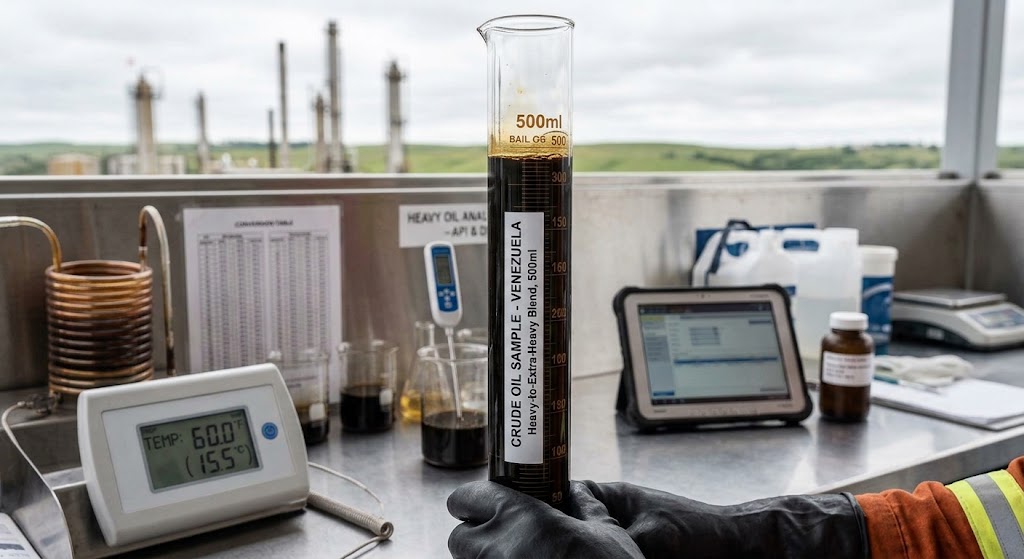
Hydrogen sulfide (H2S), commonly called “sour gas,” is one of the deadliest operational hazards in oil and gas production. It is a colorless, toxic, and highly flammable gas produced by the bacterial breakdown of organic matter in subsurface formations.
Why H2S Is Extremely Lethal
- Olfactory Fatigue (The Silent Killer): At very low concentrations (under 1 ppm), it smells distinctly like rotten eggs. However, between 50 and 100 ppm, it rapidly paralyzes the olfactory nerve. Workers lose the ability to smell it within seconds, falsely believing the gas has cleared when danger is actually peaking.
- Rapid Asphyxiation: Once inhaled, H2S enters the bloodstream and inhibits cellular respiration (similar to cyanide), preventing cells from utilizing oxygen.
- Heavier Than Air: With a specific gravity around 1.19, H2S is denser than ambient air. It settles in low-lying areas—cellars, mud pits, trenches, pump houses, and unventilated tank batteries—waiting for an unsuspecting worker.
Toxicity & Exposure Thresholds (PPM)
| Concentration (PPM) | Physical & Physiological Effect |
|---|---|
| 0.01 – 1.5 | Rotten egg odor detectable by human nose. |
| 10 | OSHA / NIOSH standard 8-hour exposure limit; eye and throat irritation begins. |
| 50 – 100 | Olfactory fatigue sets in. Sense of smell lost; severe eye damage and pulmonary irritation. |
| 100 – 300 | IDLH (Immediately Dangerous to Life or Health). Loss of consciousness within minutes; severe fluid buildup in lungs (pulmonary edema). |
| 500 – 700 | “Knockdown” effect. Instant unconsciousness, respiratory paralysis, and rapid death within minutes without rescue. |
| 1,000+ | Immediate cardiac arrest and instantaneous death in one or two breaths. |
Corrosion and Infrastructure Risk Beyond acute human toxicity, H2S destroys oilfield steel and equipment:
- Sulfide Stress Cracking (SSC): Hydrogen atoms penetrate the crystal lattice of high-strength steel casing, drill pipe, and wellheads, causing catastrophic brittle fractures under normal operating pressure.
- Pyrophoric Iron Sulfide: H2S reacts with steel to form iron sulfide scale inside tanks and pipelines. When exposed to air during cleanouts or maintenance, this material oxidizes so rapidly that it can spontaneously ignite nearby hydrocarbon vapors.
Field Safety Protocols Working on sour wells requires strict engineering controls:
- Personal 4-gas monitors worn in the breathing zone at all times.
- Positive-pressure Self-Contained Breathing Apparatus (SCBA) or supplied-air respirators (air-line systems with escape bottles) for any entry or line break.
- Continuous rig-floor monitoring, wind socks to determine escape routes upwind and crosswind, and automatic shut-in valves (SSVs).


You must be logged in to post a comment.