
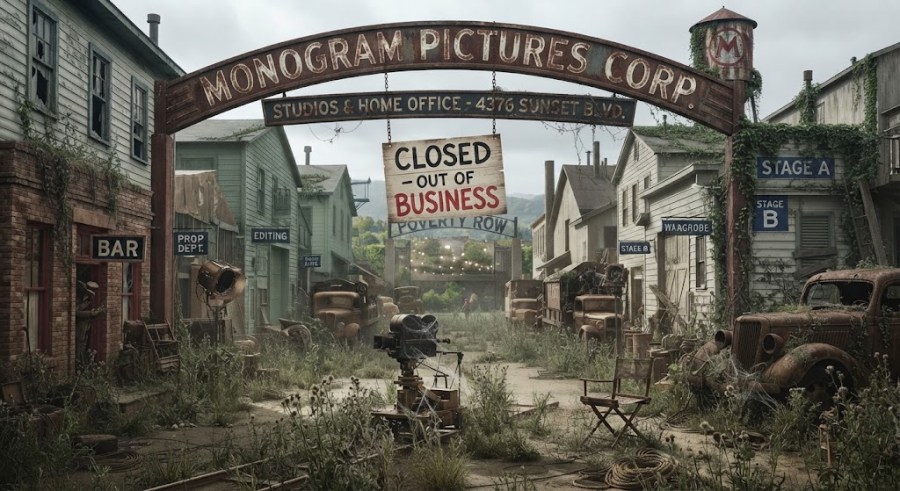
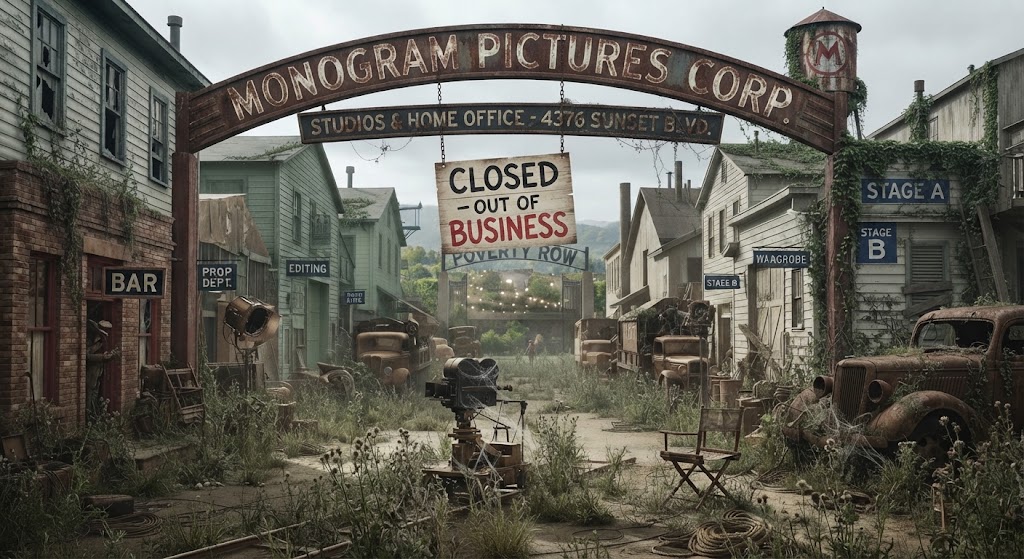
Ghosts of Poverty Row: The Rise, Fall, and Legacy of Monogram Pictures
Long before streaming algorithms curated our weekend viewing and mega-conglomerates controlled global box offices, Hollywood was a bustling, cutthroat industrial town populated by risk-takers, fast-talkers, and independent studio moguls. Among the most fascinating survivors—and ultimate ghosts—of that golden era was Monogram Pictures, a legendary titan of the “B-movie” landscape that defined an entire style of American entertainment before vanishing into history.
The Genesis and Era of Monogram (1931–1953)
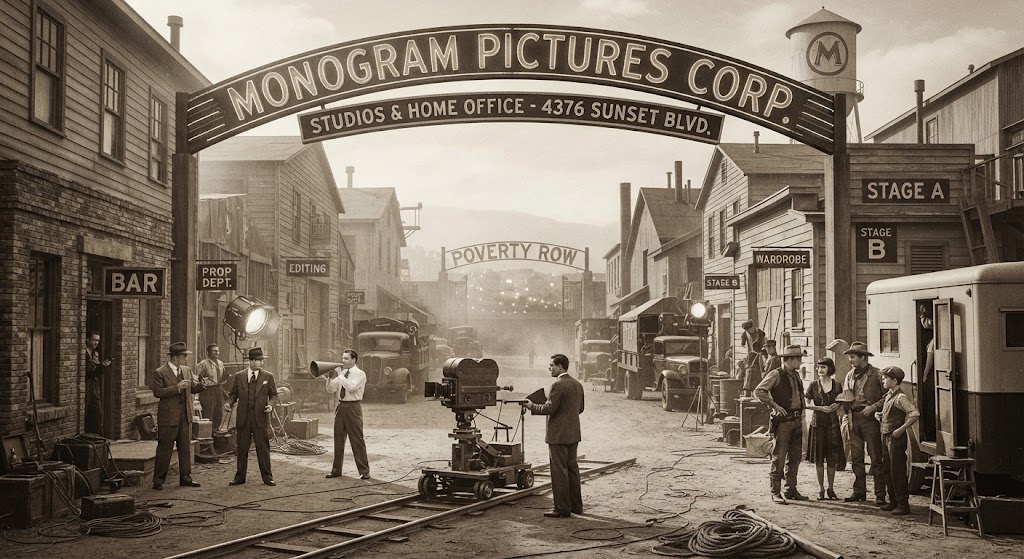
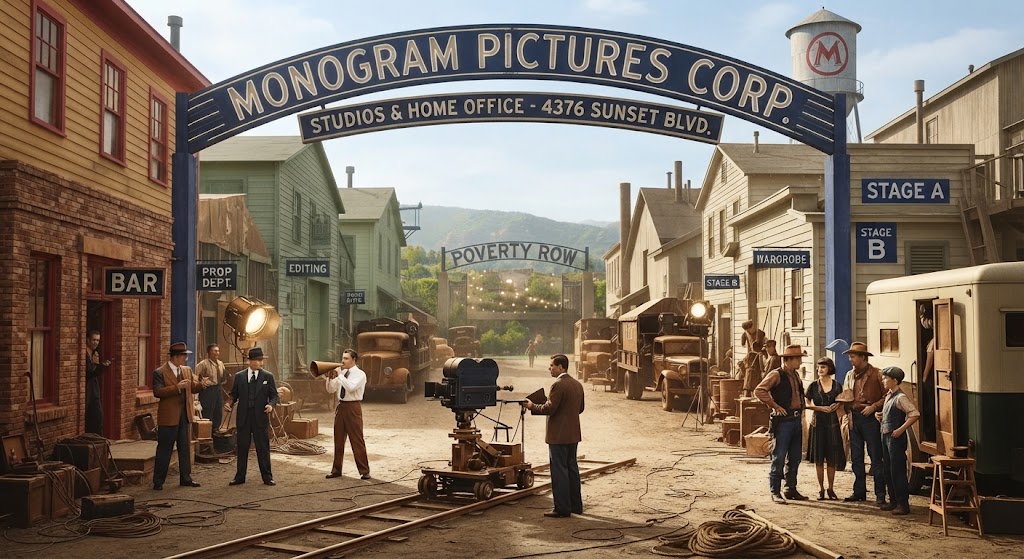
Founded in 1931 during the teeth of the Great Depression by industry veterans W. Ray Johnston and Trem Carr, Monogram Pictures was born out of necessity. While major studios like MGM, Paramount, and Warner Bros. boasted palatial soundstages and glittering roster stars, smaller independent producers banded together to feed a hungry market: neighborhood movie theaters that changed their double-features twice a week and desperately needed cheap, fast-paced content.
Monogram operated out of Hollywood’s infamous “Poverty Row”—a cluster of modest studios along Gower Street where films were shot on microscopic budgets, often in under a week, on standing sets that were frantically redecorated to pass as a Western saloon in the morning and a New York alleyway by afternoon.
Despite operating on tight margins, Monogram thrived. The studio experienced two distinct active periods: 1931 to 1935 (interrupted briefly by a corporate merger that formed Republic Pictures, which Johnston and Carr quickly fled due to creative differences), and a triumphant relaunch from 1937 to 1953.
The Masterpieces of the Grind: What Monogram Made
Monogram didn’t chase Academy Awards; they chased thrills, chills, and Saturday afternoon crowds. They specialized in genres that guaranteed bums in seats:
- The Bowery Boys & East Side Kids: Energetic, fast-talking comedy-dramas following street-smart urban youths navigating misadventures. Led by icons like Huntz Hall and Leo Gorcey, these pictures became a massive, long-running cultural staple.
- Classic Horror & Macabre Thrillers: When Universal’s monster cycle cooled down, Monogram welcomed horror royalty like Bela Lugosi and John Carradine to star in delightfully eerie quickies like The Corpse Vanishes (1942), Bowery at Midnight (1942), Voodoo Man (1944), and King of the Zombies (1941).
- Hard-Boiled Detectives & Mysteries: Monogram captured the gritty pulse of pulp fiction through multiple entries in the Charlie Chan and Shadow series, along with atmospheric noir gems like Decoy (1946).
- Wild West Action: The studio churned out hundreds of low-budget Westerns featuring rugged serial heroes like the Range Busters and Johnny Mack Brown, keeping rural and small-town cinemas endlessly supplied with galloping outlaws and showdowns.
The Evolution: From Monogram to Allied Artists
By the mid-1940s, tastes were shifting, and post-war audiences expected higher production values. Rather than folding, Monogram pulled off a clever corporate metamorphosis. In 1946, they established a prestige subsidiary called Allied Artists Productions to handle upscale projects.
By 1953, the gritty stigma of the “Monogram” brand led leadership to retire the name entirely, transitioning the entire enterprise into Allied Artists Pictures Corporation. Under this new banner, the studio stepped out of Poverty Row and into cinema history by financing and distributing critically acclaimed milestones and cult classics, including:
- Dillinger (1945)
- Friendly Persuasion (1956) (directed by William Wyler, earning multiple Oscar nominations)
- Invasion of the Body Snatchers (1956)
- Cabaret (1972)
- Papillon (1973)
Why Studios Like Monogram Disappeared
The death of Monogram Pictures—and the distinct class of independent studio it represented—was sealed by a combination of seismic industry shifts:
- The Paramount Decree of 1948: A landmark Supreme Court antitrust ruling forced major studios to divorce themselves from theater chains. Suddenly, major studios could no longer guarantee shelf space for their own films by forcing independent theaters to buy block-booked packages of “B” movies.
- The Rise of Television: By the 1950s, living rooms across America lit up with free home entertainment. Families stopped making weekly trips to local picture palaces for routine double-features, hammering a nail into the coffin of low-budget program-fillers.
- The Inflation of Scale: As filmmaking migrated toward widescreen epics, color cinematography, and blockbuster talent to compete with television, the economic model of turning out a $30,000 action flick in six days ceased to be viable.
The Enduring Echo
Today, Monogram Pictures exists as a ghost in the cinematic machine—its vast catalog scattered across public domain archives, specialty streaming channels, and late-night film retrospectives. Yet, whenever we watch a fast-paced, high-concept genre film that bypasses high-brow pretension to focus purely on gripping entertainment, we are feeling the invisible blueprint laid down by the scrappy hustlers of Poverty Row. They didn’t have multi-million dollar budgets, but they understood the ultimate rule of the silver screen: keep the audience watching.


You must be logged in to post a comment.